When urban homesteading it is nearly impossible to grow or raise everything you will want or need. However, there is typically an abundance of fruits and veggies you do grow. This allows for a very beneficial relationship between friends and family.
Bartering is one of my favorite things to do. I find the bantering back and forth quite exciting. However, a whole new excitment is added when I am bartering with something I raised, grew, or harvested from my own little farm.
The whole act of bartering, to some, may seem like a greedy grab to unfairly take someone elses items for the least amout you can. This is only in part true. Of course you want to get the best trade you can, but this does not make you greedy. If you remember, you are not bartering by yourself. You and your barter buddy have to agree on a deal that both find reasonable. No one is forced to make a deal they don't want.
On the other hand, bartering can be quite beneficial to both parties. I have several people I barter with on a regular basis. Some I provide with fresh goat milk, some with veggies, and some with good ole manual labor.
A good example of bartering working out for both parties went on all last summer. My neighbor worked for a grass cutting company owned by his family. When he would finish mowing his yard he would come over and cut my front yard. In return we would give him home made bread and fresh eggs. He didn't mind cutting my front yard, and I had eggs to spare! It was like a match made in heaven!
Do yourself a favor... barter!
Thursday, July 24, 2014

Thursday, May 8, 2014
Why waste free water?
Something I have noticed is it takes a lot of water to keep the animals hydrated and the garden watered. I also am not really excited about watering my garden with chemicals such as chlorine, fluoride, as well as trace amounts of pharmaceutical drugs. It is bad enough we have to drink it, so why not use a healthier substitute if one was available? Well wouldn't you know it! There is one! We call it rain.
Below is a quick, down and dirty, and mostly free rain water barrel collector!

First thing I did was acquired a couple of "food grade" plastic barrels.
Second, I cut off the downspout about 4" higher than the barrel.
Next I got a piece of old fire hose that was laying around the house and removed the thin rubber inner liner, fashioned a funnel with some staples, and attached it to the downspout with some small screws.
Lastly, I scooted over a barrel and inserted the rubber funnel into one side of it making sure the caps were both off (so as to allow it to overflow away from my funnel).
 As far as getting the water out, we use a simple siphon (with the assistance of a foot pump usually used to air up pool toys) to fill buckets and watering cans. The intent was to get a hand pump for them but the fact that the free solution is working makes the pump less of a priority.
A couple things I am going to add are several more barrels, a connector of some kind (to allow them to overflow into each other, relieving me of the duty of moving rain collectors after every storm), a hand pump, and probably some black paint or plastic to keep the algae from growing inside.
Questions? Comments? Suggestions on topics or Ideas for other projects we could do? Leave them here in the comments and we will be happy to address them!
Below is a quick, down and dirty, and mostly free rain water barrel collector!
First thing I did was acquired a couple of "food grade" plastic barrels.
Second, I cut off the downspout about 4" higher than the barrel.
Next I got a piece of old fire hose that was laying around the house and removed the thin rubber inner liner, fashioned a funnel with some staples, and attached it to the downspout with some small screws.
Lastly, I scooted over a barrel and inserted the rubber funnel into one side of it making sure the caps were both off (so as to allow it to overflow away from my funnel).
A couple things I am going to add are several more barrels, a connector of some kind (to allow them to overflow into each other, relieving me of the duty of moving rain collectors after every storm), a hand pump, and probably some black paint or plastic to keep the algae from growing inside.
Questions? Comments? Suggestions on topics or Ideas for other projects we could do? Leave them here in the comments and we will be happy to address them!
Saturday, May 3, 2014
I HATE WEEDS!
Weeds...the arch nemisis of anyone trying to grow a garden or have a nice walkway/driveway. How the heck do you expect to do anything with weeds taking over? That has been my exact thoughts every spring. So, how are you supposed to kill the weeds without having to worry about the kids or animals getting into some crazy poison?
I'm glad you asked! I was wondering the same thing...so I tried some stuff out. To my surprise I found a recipe that works really well. Now you have to remember this works really well for a non-poison herbicide. Not like the stuff we used when I was a groundskeeper. (I think that stuff was part agent orange). Fill a large squirt bottle with white vinegar and add about a quarter cup of dish soap. After mixing well, I sprayed this on the weeds and in about 4-5 days the weds were totally fried. I read an article that said this killer will also "poison" the soil for about a week. I have not tried to plant where I sprayed due to the fact I don't want veggies growing out of the cracks in the driveway.
If you are worried about weeds in the garden there are a couple alternatives. First is the old fashioned way. Go out and pull out all the weed green and roots. Down side to that is it takes forever if you don't keep up on it. Second is get a black tarp or sheeting and lay it out. Cut holes where your plants are to be planted. Down side is watering. If the hole is too big it can get weeds if it is too small you can't get enough water to the plant. Lastly, plant your veggies making sure they are the only thing green in the garden. Then place a thick layer of straw (Not hay! Hay is grass and contains grass seeds, straw is the stems from wheat stalks, containing no seeds.) covering the open ground. This needs to be as dense as you can keep it. If it is too "fluffy" it could allow weeds to sprout.
 Something my parents are trying is laying down a layer of cardboard down (if you use newspaper be sure not to use the glossy sales ads and not to layer it more than two layers thick) then covering it with your dirt and planting it there. The idea sounds great. No tilling, limited weeds, and in theory the plants should be able to break through the cardboard. I'm sure we will have an update towards the end of the season.
These are a few of the things I have tried. If you have any other ideas leave me a comment and let me know. Be sure to follow us to keep up on our adventures!
I'm glad you asked! I was wondering the same thing...so I tried some stuff out. To my surprise I found a recipe that works really well. Now you have to remember this works really well for a non-poison herbicide. Not like the stuff we used when I was a groundskeeper. (I think that stuff was part agent orange). Fill a large squirt bottle with white vinegar and add about a quarter cup of dish soap. After mixing well, I sprayed this on the weeds and in about 4-5 days the weds were totally fried. I read an article that said this killer will also "poison" the soil for about a week. I have not tried to plant where I sprayed due to the fact I don't want veggies growing out of the cracks in the driveway.
If you are worried about weeds in the garden there are a couple alternatives. First is the old fashioned way. Go out and pull out all the weed green and roots. Down side to that is it takes forever if you don't keep up on it. Second is get a black tarp or sheeting and lay it out. Cut holes where your plants are to be planted. Down side is watering. If the hole is too big it can get weeds if it is too small you can't get enough water to the plant. Lastly, plant your veggies making sure they are the only thing green in the garden. Then place a thick layer of straw (Not hay! Hay is grass and contains grass seeds, straw is the stems from wheat stalks, containing no seeds.) covering the open ground. This needs to be as dense as you can keep it. If it is too "fluffy" it could allow weeds to sprout.
Something my parents are trying is laying down a layer of cardboard down (if you use newspaper be sure not to use the glossy sales ads and not to layer it more than two layers thick) then covering it with your dirt and planting it there. The idea sounds great. No tilling, limited weeds, and in theory the plants should be able to break through the cardboard. I'm sure we will have an update towards the end of the season. These are a few of the things I have tried. If you have any other ideas leave me a comment and let me know. Be sure to follow us to keep up on our adventures!
Thursday, May 1, 2014
Saving Money the Stinky Way
Hey, Tiff here! As the momma of our growing family, I have the responsibility of being frugal with the money God has blessed us with. It’s a duty that isn’t always fun, but one that I accept with gladness. I know that my decisions affect my whole family, not only in the now, but in the future as well. Here is a story of the beginnings of my ‘learning to be frugal adventure‘. While I was still pregnant with our little Lydia (our first child), I ventured into Cotton Babies out of pure curiosity (I managed to get my hubby to go with me). I didn’t really know what kind of store it was, just that they sold baby products. A first time momma + a baby store = trouble! Upon entering Cotton Babies, I realized this wasn’t your ordinary baby store…it was mostly a cloth diaper store. I had heard of cloth diapers, but only the kind that great grandma used. I was in awe of all of the different styles of cloth diapers, not to mention all the cute colors and prints! After browsing around…and around…and around, and talking with the ladies who worked there, Dave and I realized that cloth diapering might actually be an option for us. While my mind was still buzzing with thoughts of diaper sprayers, diaper pails, and wet bags, we went home and did our own research to see if this decision could really save us money. Our investigation led us to the final decision…WE WERE GOING TO CLOTH DIAPER…AHHHH! Next time I went to Cotton Babies, I made one of the biggest purchases of our married life…diapers! We ended up spending around $450 if I remember right. We got 24 diapers with inserts, a wet bag, diaper pail, and diaper sprayer. It doesn’t sound like much bang for your buck, but when you think about the fact that you will spend about $2,500 in disposable diapers during a baby’s diaper career (if potty trained by 2.5 years), it puts things in perspective. For us, an added bonus is that we have been able to use most of the diapers we purchased for our first child, for our second as well…ChaChing!!! While spraying out poopy diapers isn’t my favorite mommy job, I know I am helping to contribute to our family by saving us money. J
I just want to say, even though cloth diapering has worked out wonderfully for our family, it isn’t for everyone. Every family has to take into consideration their own situation and go from there! So kudos to the cloth diaper momma and kudos to the disposable diaper momma. I can’t wait to go diaper shopping for baby Charlotte…they have way too many cute prints out now! Stay tuned for my next entry on homemade cloth wipes and DIY wipe solution!
Saturday, April 26, 2014
How to pick your perfect chicken
How to pick your perfect chicken.
Chickens are an amazing creature. Just like dogs each breed has it's own unique quarks. Before you can start looking for the type of chickens to buy, you have to ask what their role will be on your farm. Will they be strictly egg layers or for meat? Are they going to be in a small coup or free range? Does egg shell color matter? Will these layers be for producing future generations? All of these are very important questions to ask yourself.
Over the years I have probably owned a couple hundred chickens. I have my favorite breeds and I have breeds I tend to avoid. Here are some of the breeds I with which I am familiar.
 Plymouth Barred Rock: Very friendly if hand raised. Good layer of large brown eggs. Also a decent chicken to eat. Only breed I have ever had get "broody." Still one of my absolute all time favorites!
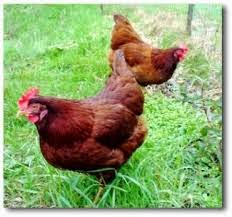
Rhode Island Red: Another of my favorites! Fairly friendly, heavy layer of large brown eggs. Also a fairly meaty breed.
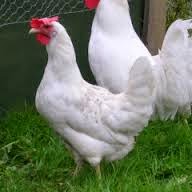 Leghorn: Not very friendly/ borderline mean breed. Little to no meat value, but these girls sure can lay! Sometimes two eggs a day.
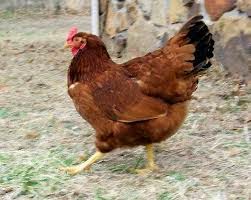 Production Red: A cross breed between the Rhode Island Red and the Leghorn taking most of it's attributes from the Rhode Island Red side.
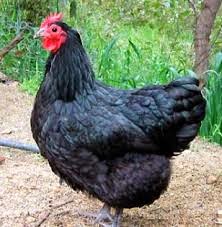
Australorp: This chicken is just here for business. Indifferent attitude, mid to heavy layer, and decent meat.
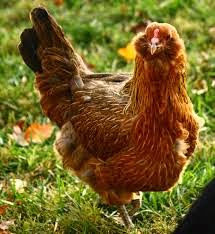 Americana: Smaller breed that seem a bit skiddish. Decent layers with odd color eggs including greenish to blueish shades.
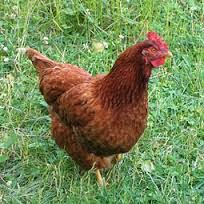 New Hampshire Red: Another large breed, heavy layer and a fair disposition.
Disclaimer! These are my experiences with these breeds. Your experience will vary.
Chickens are an amazing creature. Just like dogs each breed has it's own unique quarks. Before you can start looking for the type of chickens to buy, you have to ask what their role will be on your farm. Will they be strictly egg layers or for meat? Are they going to be in a small coup or free range? Does egg shell color matter? Will these layers be for producing future generations? All of these are very important questions to ask yourself.
Over the years I have probably owned a couple hundred chickens. I have my favorite breeds and I have breeds I tend to avoid. Here are some of the breeds I with which I am familiar.
Plymouth Barred Rock: Very friendly if hand raised. Good layer of large brown eggs. Also a decent chicken to eat. Only breed I have ever had get "broody." Still one of my absolute all time favorites!Rhode Island Red: Another of my favorites! Fairly friendly, heavy layer of large brown eggs. Also a fairly meaty breed.
Leghorn: Not very friendly/ borderline mean breed. Little to no meat value, but these girls sure can lay! Sometimes two eggs a day.Production Red: A cross breed between the Rhode Island Red and the Leghorn taking most of it's attributes from the Rhode Island Red side.Australorp: This chicken is just here for business. Indifferent attitude, mid to heavy layer, and decent meat.
Americana: Smaller breed that seem a bit skiddish. Decent layers with odd color eggs including greenish to blueish shades.New Hampshire Red: Another large breed, heavy layer and a fair disposition. Disclaimer! These are my experiences with these breeds. Your experience will vary.
Thursday, April 24, 2014
What we have to work with
Now that we got the introductions out of the way, let me show you around the farm. We live on about 6,652 sqft of ground. On that we have four goats, 15 chickens, and quite a sizable garden. Size limitations require us to utilize our resources with masterful efficiency.
Our front yard is the least utilized piece of land we have. My wife and kids have laid claim to the beds here. Tiff mostly uses them for ornamental flowers. She planted some sage last year that was a real asset to out spice cabinet! We also have about a dozen pots to start or keep plants in the front. I am happy to see her strawberries have really taken off this spring.
 In the back yard we have our piece of heaven. When we first got our chickens they had full range of the back yard. However, due to the chicken's inability to poop somewhere other than our back steps we have confined them to the pen shared with the goats. Our goats and chickens are confined to the side and about half of the back yard. It gives them plenty of room to play and their respective "huts" give them a break from the weather as well as the other animals.
Our garden stretches across the back of the yard. We had the garden in a couple other places and have not had quite the same harvest. In years past we have had several reoccurring favorite plants. One of our favorites is tomatoes! They are delicious and they also preserve well. Another regular in our garden is okra. It is great in salsa, soups, and best of all fried! This year we have a couple of new comers. Summer squash, sweet peas, and lavender are just a few we hope will become regulars.
Our front yard is the least utilized piece of land we have. My wife and kids have laid claim to the beds here. Tiff mostly uses them for ornamental flowers. She planted some sage last year that was a real asset to out spice cabinet! We also have about a dozen pots to start or keep plants in the front. I am happy to see her strawberries have really taken off this spring.
Our garden stretches across the back of the yard. We had the garden in a couple other places and have not had quite the same harvest. In years past we have had several reoccurring favorite plants. One of our favorites is tomatoes! They are delicious and they also preserve well. Another regular in our garden is okra. It is great in salsa, soups, and best of all fried! This year we have a couple of new comers. Summer squash, sweet peas, and lavender are just a few we hope will become regulars.
Tuesday, April 22, 2014
Meet the crew!
 Hey, I'm Dave..."farm boss" of Ginger's farm, Husband to the most wonderful wife on the planet, and father to (almost) 3 amazing kids. By day I am a full time firefighter and by night I tend to my little piece of ground. I was raised on a 10 acre farm in Florida and fell in love with farm life. Ever since then I have been determined to raise my kids the same way; with hard work, a loving family, and most importantly a love for our Savior Jesus Christ. With all the hustle and bustle in this world we tend to forget our roots. Eventually we loose the ability to provide our own food and water. We strive to be different. The life we live is seldom easy, but we love it! Follow us as we show our urban homesteading lives to you one day at a time.
Hi, I'm Tiffany...Mommy of the Ginger Farm. I am blessed to be the mother of two, almost three, amazing little red heads and the wife to the greatest craftsman I know. I am a follower of Jesus and strive to honor Him with my life. Throughout our urban farming adventure, I'm learning each day to be thankful for the resources God has given us to live simply and happily. I hope you enjoy reading about our experiences and memories on our little farm as much as we enjoy living them!
 Hi! My name is Lydia! I am the oldest kid here on the farm. I love playing with my brother and watching my movies with my family. I really enjoy helping mom in the kitchen when she is cooking (but my favorite is when we are baking sweets!) I also enjoy playing with the goats and helping with milking!
 My name is Davey! I LOVE the outdoors. I am always getting into trouble around the house. I do try to help when it comes to feeding and watering the chickens and goats. Mom and dad say I mostly play in the food and water I like to call it quality control. Things I'm good at are helping pick up toys, helping dad in his workshop, and falling down ( this walking thing is harder than it seems).
Subscribe to:
Posts (Atom)